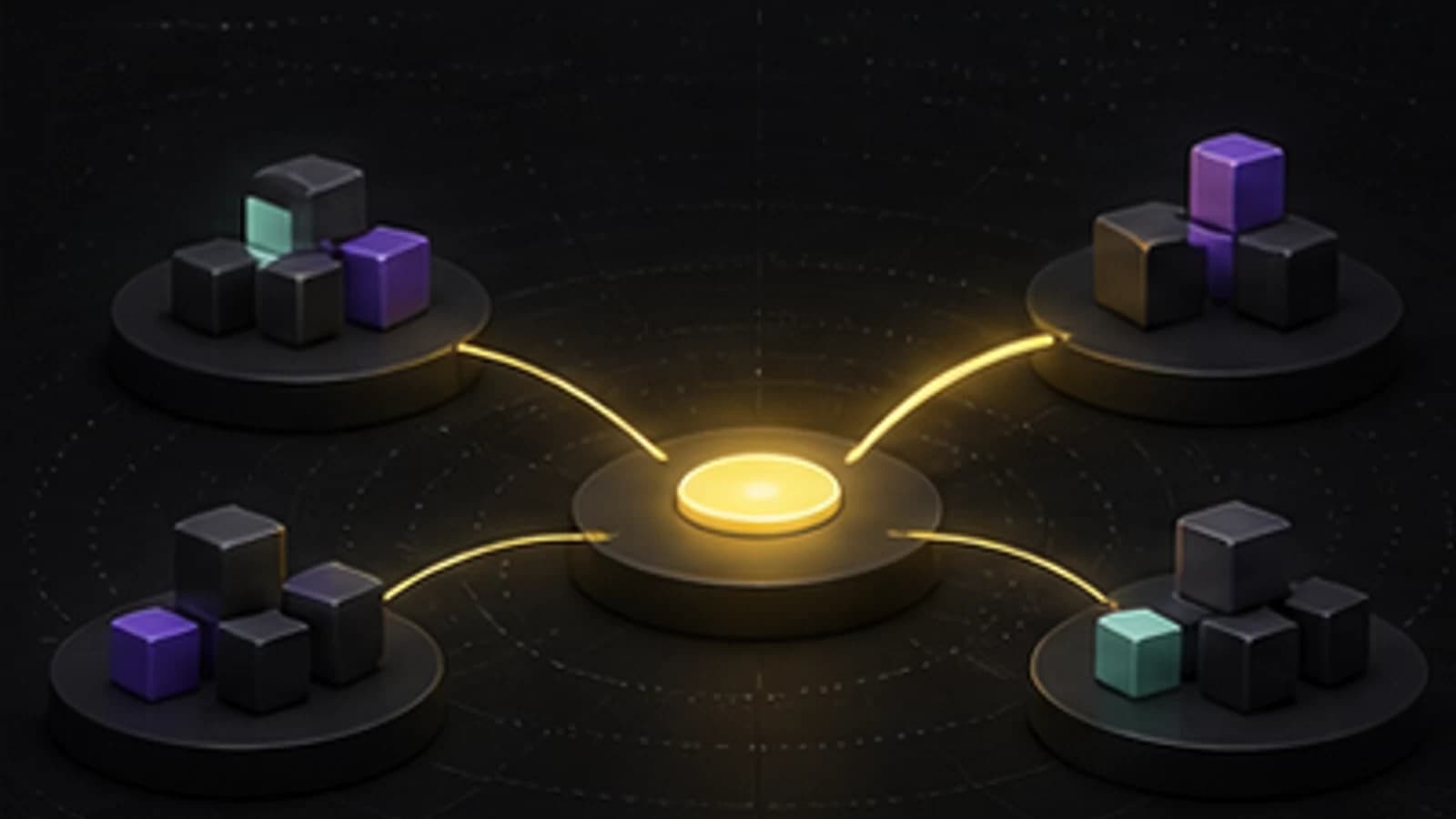
Most growing businesses use several systems to manage customers, projects, documents, communication and reporting. Each tool may work well on its own, yet the business can still feel difficult to operate because information does not move cleanly between them. Staff copy details from one place to another, managers ask for updates that already exist somewhere, and customers repeat information the business should already know.
This disconnection is easy to dismiss as an inconvenience. In practice, it creates a hidden operating cost that compounds as the team, customer base and workload grow. The real issue is not the number of tools. It is the amount of human effort required to keep those tools aligned.
The work between the systems
A disconnected process often appears functional because the work still gets completed. What remains invisible is the coordination required to make that happen. Someone downloads a report, updates a spreadsheet, sends a message and creates a task. Another person checks whether the customer record reflects the same information. These small actions can take only a few minutes each, but repeated across a week they become a meaningful drain on capacity.
Manual coordination also makes performance dependent on individual memory. A capable employee may know which fields to update, who needs to be notified and where a document belongs. When that person is absent or overloaded, the process becomes fragile. The business has not built a reliable system. It has built a collection of personal routines that happen to hold the system together.
- Repeated data capture consumes productive time.
- Manual handoffs create avoidable waiting.
- Important process knowledge stays in people's heads.
Slow information leads to weaker decisions
Leadership decisions are only as useful as the information behind them. When sales, delivery and finance data sit in separate places, producing a trustworthy view of the business becomes a project of its own. Reports arrive late, figures need to be reconciled and teams debate which version is correct. By the time the picture is clear, the best moment to act may have passed.
Disconnected information can also hide patterns that would otherwise be obvious. A rise in support requests may be connected to a particular service, customer segment or stage in the onboarding process. If those records cannot be viewed together, the team sees isolated incidents instead of a process problem. Better integration does not replace judgement, but it gives people a clearer basis for applying it.
- Reporting becomes slower and less trusted.
- Teams work from different versions of reality.
- Useful patterns remain hidden across separate records.
The customer feels the gaps
Customers may never see the systems behind a business, but they experience the consequences of disconnection. They receive duplicate questions, wait while staff locate information or get messages that do not reflect their current status. None of these moments may be severe on its own. Together, they make the organisation feel less attentive and less coordinated.
Connected processes create a different experience. Information captured once can guide the next step, internal teams can see the same context and communication can reflect what has already happened. The goal is not to automate every customer interaction. It is to remove the preventable friction around those interactions so that people can focus on the moments where judgement, empathy and expertise matter.
- Customers should not need to repeat known information.
- Communication should reflect current process status.
- Human attention should be reserved for valuable conversations.
Start with the most expensive gaps
Connecting everything at once is rarely the best starting point. A practical approach is to map one important workflow from beginning to end and identify where information is copied, delayed, lost or checked repeatedly. Those moments reveal the real cost of disconnection. They also make it easier to choose an improvement that has a clear operational purpose.
Prioritise the gaps that occur frequently, affect customers or create risk when missed. Then define which system should hold the authoritative record and what information needs to move to the next stage. A focused integration can remove hours of repetitive work without forcing the business into a disruptive rebuild. The strongest systems usually emerge through a sequence of well-chosen improvements.
- Map a real workflow before selecting a solution.
- Prioritise frequent, risky or customer-facing gaps.
- Create one reliable source for each important record.
Questions people ask
Frequently asked questions
01What are the signs that business systems are disconnected?
Common signs include repeated data entry, mismatched records, manual reporting and staff searching several places for the latest status. Customers may also be asked to provide information the business already holds.
02How do disconnected systems increase operating costs?
They add coordination work, delay decisions and increase the chance of errors or duplicated effort. These costs often grow quietly as transaction volumes and team size increase.
03Does system integration require replacing every existing tool?
Not necessarily. A business can begin by improving how information moves through one high-friction workflow while keeping useful existing systems. Replacement becomes relevant when a core system cannot support the required process or control.
The useful bit
Three things to carry forward
- 01Disconnected systems create costs through coordination, delays and duplicated work.
- 02The most valuable integrations improve both internal clarity and customer experience.
- 03Begin with one high-friction workflow and solve the most expensive gaps first.